
START YOUR RESELLING BUSINESS ORGANIZED!
If you are starting a reselling business—whether it’s handmade products, boutique clothing, digital downloads, or a mix of everything—there is one habit that will save you time, money, and stress: organizing your inventory from the very beginning. I actually cannot stress this enough. When I began my ebay journey, I dumped listings into bins, labeled A-Z. This was a pluck out your gray hair nightmare. I soon ended up with 26 plastic bins that were so tight the tops would not close. I had to rummage through each bin, piece by piece, to locate an item that sold. Don’t be me.
Organizing is not glamorous, or even fun, but it’s the backbone of a smooth‑running business. Here’s why early organization matters and how to set yourself up for success.
Start With a System (Even a Simple One)
You don’t need fancy software or a warehouse. What you do need is a clear, consistent method for tracking what you have. Choose something you can stick with. Choose something that can grow as you add more and more listings. There is the “bin system”. There is the infinite numerical system. There is the numbered box system. I will explain all of those later.
First: Label Everything!
Your future you will thank the present you for this. Trust me. Labels prevent mix‑ups, reduce packing errors, and make restocking a breeze. Whether you use printed labels, handwritten tags, or digital QR codes, clarity is your best friend.
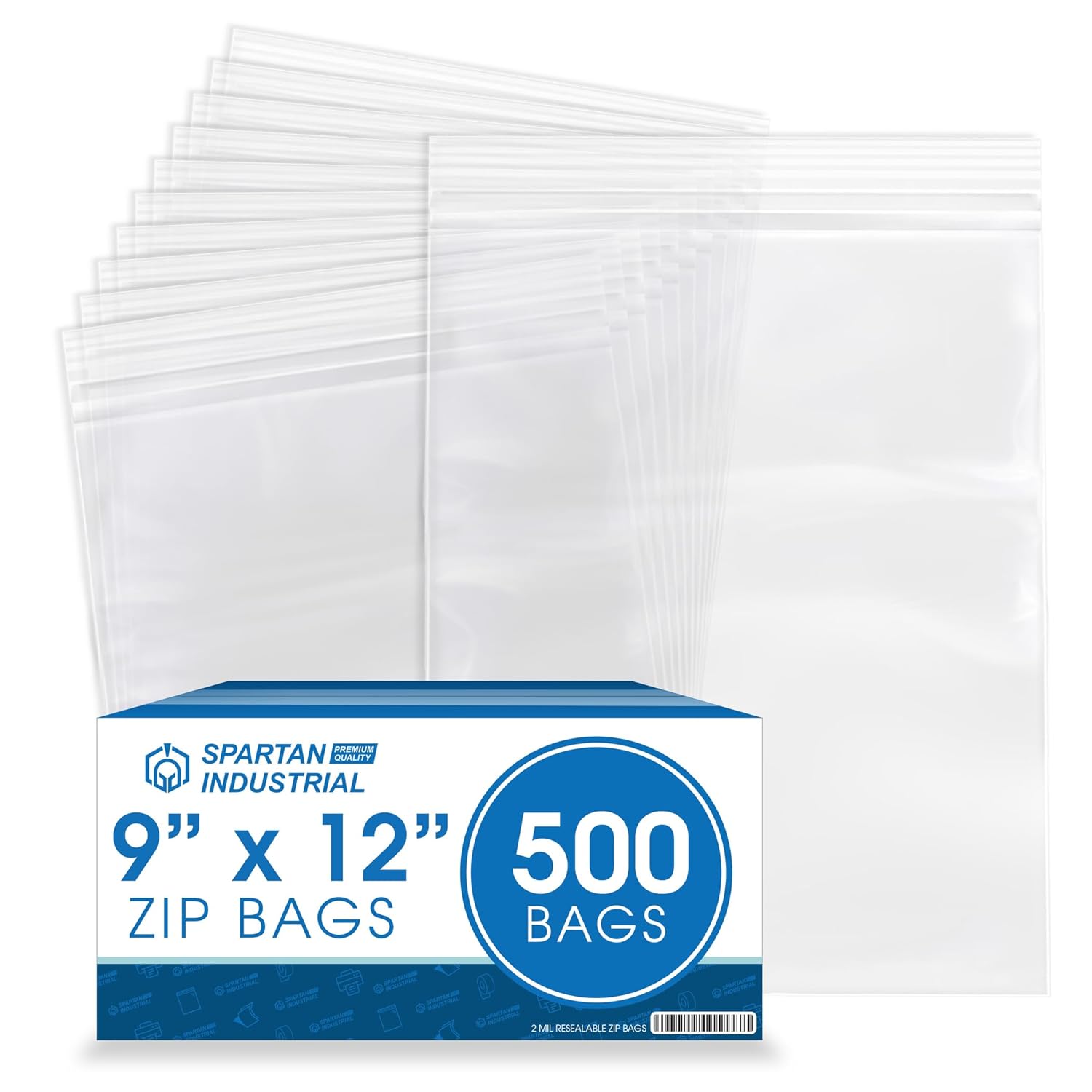
These are the bags that I use to inventory my items.
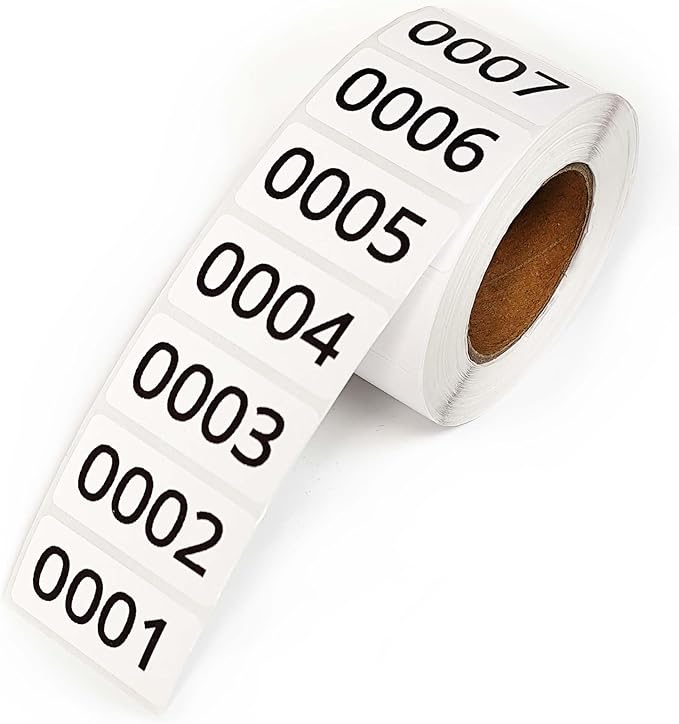
And, these are the labels that I use in my reselling business.
Decide On Your Inventory System From The Start
Numbered Box System: I personally use the numbered box system. Each box holds 20 items. Thus, my boxes are labeled 20, 40, 60, etc. I know that box #20 contains SKUs 1-20, box #40 contains SKUs 21-40, and so on. When an item sells, I simply reuse that numbered bag for my next listing. This keeps 20 listings in each box and I am never having to “condense” my boxes when something sells. (Sweaters, dresses, jeans, coats, and more bulky items are either hung up or placed in clear bins.)
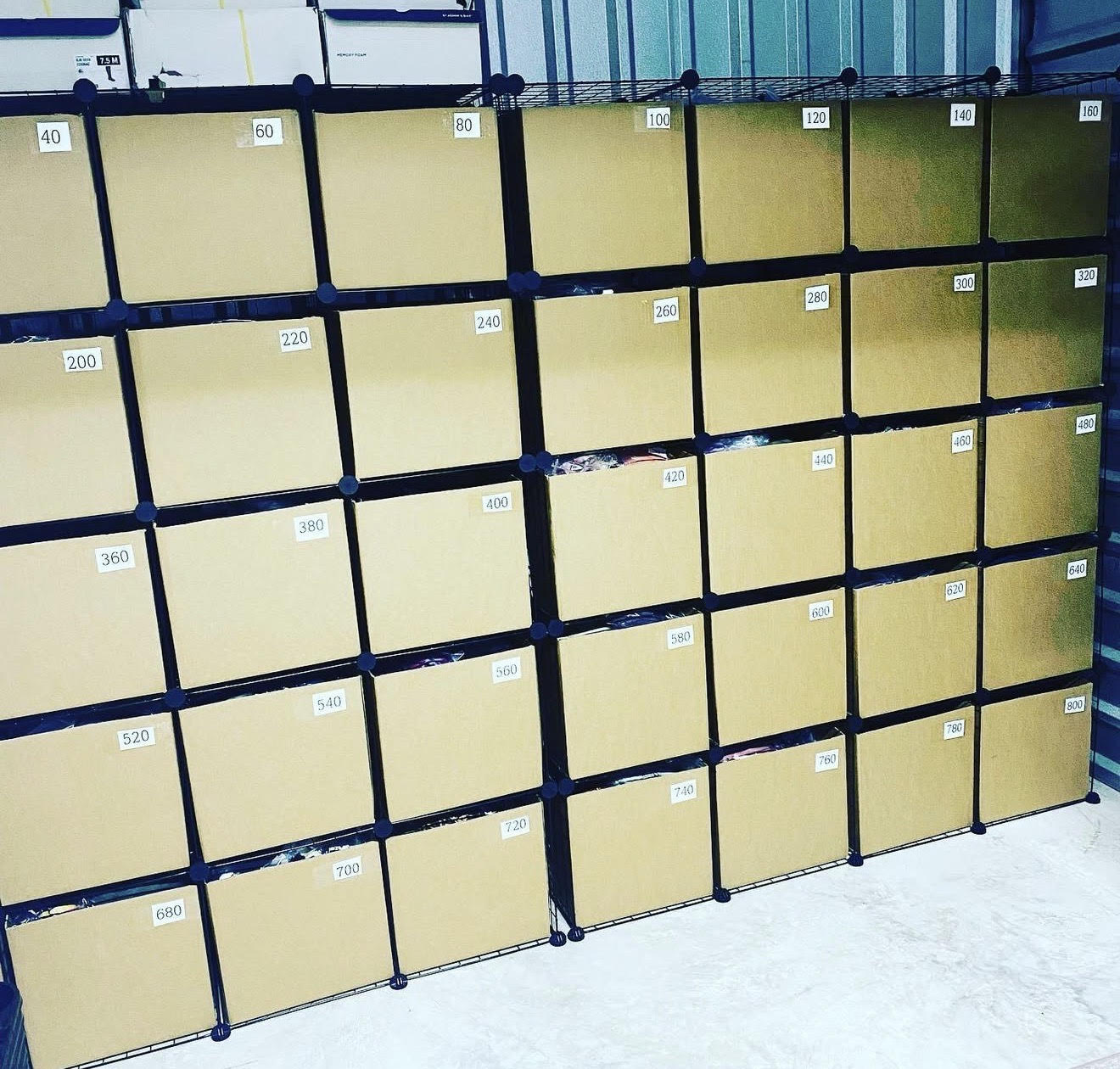
Infinite Number Sku System: Many resellers use this system. They will never use a SKU number twice. They will place their inventory in boxes on shelves and as they sell, they will spend a few minutes once or twice a week “condensing” all of their boxes, keeping all of the listings in numerical order. Whereas, I use the same 1-2000 SKU numbered bags over and over again, these resellers do not. They keep adding SKU stickers numerically, into infinity.
The Bin System: We talked about this. Plastic bins labeled with listings tossed inside. It is a mess. If you have just a few listings, this is fine. But, trust me, you will scale. You will list more than you sell, especially at the beginning. And, you will find yourself lifting and hefting those heavy bins down off of each other to dig around for your items. I give this system a big thumbs down.
Inventory Every Item Quickly
When every product has a designated spot, you eliminate the “Where did I put that?” chaos.
Use bins, drawers, or shelves—whatever fits your space. The goal is to make finding sold items quick and easy. Once your store is rolling, you will have more than a few items to get packed up and shipped out. You do not want to spend all afternoon trying to find your items.
Reduce Stress Before It Starts
A messy inventory system leads to rushed packing, lost items, and unnecessary frustration.
An organized system gives you peace of mind, smoother workflows, and more time to focus on what you love—thrifting, selling, and growing your business.
Build Good Habits Early
The earlier you build your system, the easier it is to maintain as your business grows.
Think of it as planting seeds: a little effort now leads to a thriving, efficient operation later. Once you master ebay and think about cross listing your items to other platforms, being organized is paramount.
#ad #amazonaffiliate #affiliate #reselling #ebayreseller #ecommerce
 My Life Between Listings - Pam Pleasant